
I live near a plastic surgeon who often casually approaches people and starts telling them what he would change about their face or body. It’s both funny and disturbing—especially since these people never asked for his opinion.
On one hand, I think it’s a smart sales tactic: if he talks to a thousand people, maybe one will say, “Okay, I’ll be your client.” At the same time, he’s not the most popular guy (probably due to his insistence on telling people how he would “improve” them), he is obese, and he doesn’t strike me as the happiest person either. Here’s the irony: this man goes around telling people how to become prettier, yet he arguably struggles with his own sense of health, beauty, and happiness (isn’t this true for all of us to some extent?).
And while I don’t doubt his professional expertise, I question whether it’s even necessary. After all, why do most people get plastic surgery? Because they want to look better, and therefore feel better.
However, this search for positivity (or avoidance of negativity) can come from countless other sources. After all, markets are flooded with millions of “solutions for happiness,” such as new houses, cars, nails, beer with friends, drugs, expensive vacations—you name it. So why plastic surgery specifically? Why any of these solutions?
This is the question I asked myself when I was severely depressed. I started reviewing every possible solution, trying to understand how necessary each one was for me. Eventually, I found a formula for happiness, becoming one of the happiest people in the world, and let me tell you, once you’re truly happy, many of those “solutions” become irrelevant.
For example, I might have considered plastic surgery at one point, while in reality I just had low self-esteem. There was nothing particularly wrong with my looks. Sure, I could always look better, but in the same way, I could have more money, more friends, better health, or a better diet. Some of these solutions are far less intrusive and expensive than plastic surgery.
So again: Is it really necessary, or is it just something we want?
For example, I have a female friend who wants a boob job. When she mentioned it, even people who didn’t seem to need it said that they too want something more or less here or there. Everybody wants something. And you know what? Every week this girl tells me that she wants something different. A boob job just happens to be the latest.
And can you blame her for being so undecided? After all, everyone is screaming that their solution for happiness is the one and will make you finally happy. However, we go through many such solutions daily, and how many of us can truly say they are happy? And how many of the same people say that they are depressed?
So even if she gets this boob job, can we say for sure that this rather expensive and intrusive operation will solve all her problems or improve her life? Could there be something else she could be doing instead?
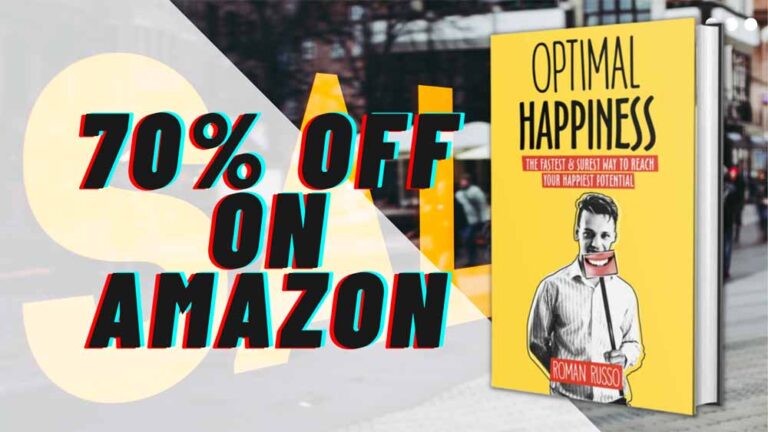
For example, how many of you have considered taking an Optimal Happiness course? After all, it is designed to help people achieve their happiest potential, once and for all, helping them become their best self and making other happiness solutions useless.
And the good news is that if you write to me directly and mention you read this in the post, I’ll give you a significant discount, which would make this course significantly cheaper than plastic surgery (and thousands of other “happiness solutions”), while offering you a path to unlimited happiness: reaching your happiness potential once and for all, and maintaining it for the rest of your life. And did I mention a 30-day money-back guarantee if it doesn’t work?
So, what’s your next happiness project? What do you think you need next to be extremely happy? Write it in the comments.
Stay happy.