My mom calls me an angel, as she rightfully should, as her son. However, she does it more because she sees me doing everything right, as she sees me practicing my happiness habits, though she is not aware of any negative behaviors.
However, I say that “everyone gets to have one” addiction, partially because I have one negative habit, which my mom doesn’t know about or see, which is energy drinks. I know, I know, I shouldn’t drink these, and a lot of people go out of their way to tell me how bad these are. Ironically, even one shop owner, whose livelihood depended on people like me buying almost 90% of their unhealthy inventory, once told me not to do it. I wonder how often they tell all their clients not to buy their stuff, or if it was just me, or just people who buy energy drinks?
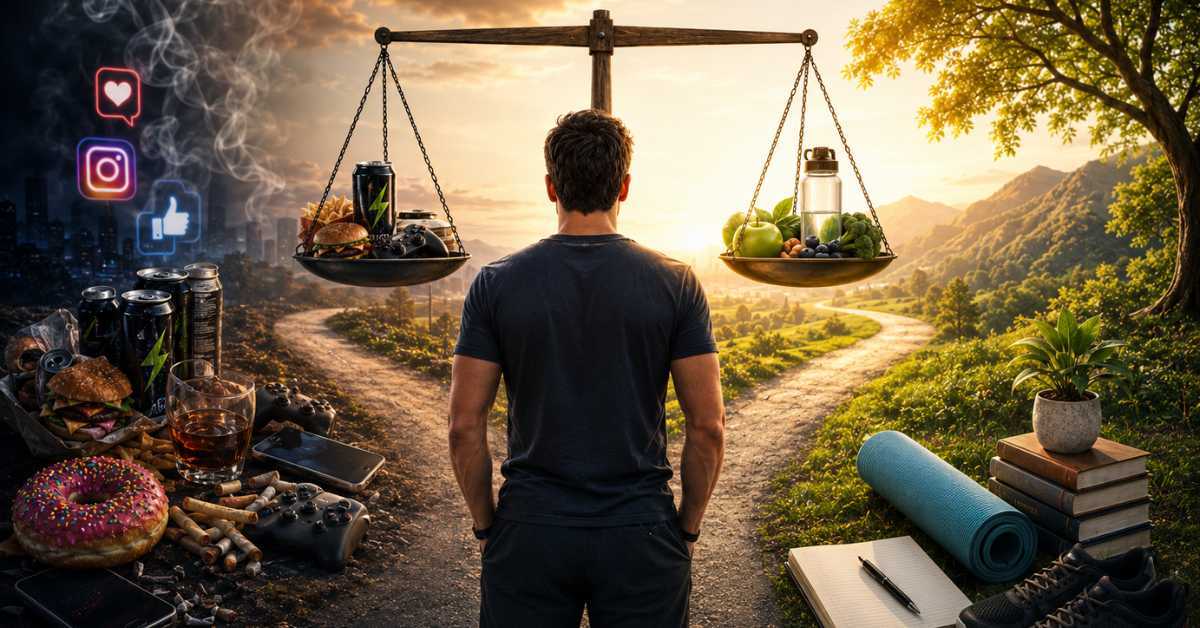
But here’s the thing: a lot of people who hate on energy drinks are the same ones who are smoking, gambling, drinking alcohol, taking drugs, sitting for hours in front of TVs, scrolling on social media, compulsively shopping, compulsively eating (or not eating enough), compulsively doing anything else (as in, in high amounts, almost nothing is good), they’re negative toward themselves and others, etc. They’ll tell me not to drink energy drinks while they’re doing everything else. So, can they really tell me this, if I’m aware of the pros and cons of energy drinks, and I can list every other negative behavior they do and confront them back on that?
In my defense, I drink energy drinks for work, for concentration, not entertainment. To write these blog posts, my books, and record happiness programs, I require a lot of deep thinking and undivided attention to detail, and often without these drinks I achieve half of the work in a day I could otherwise do, so for me it is worth it. Or so I think, as I’m sure that there are a lot of professionals who don’t need energy drinks to survive.
I’m aware of the negative side of energy drinks, which are the sugar, chemicals, and borrowed energy, as all the extra energy I gain in the morning, I lose it in the evening, making me way more tired afterwards.
In my defense, I do it strategically, and I do everything else correctly so I can compensate, which is also why I say that “everyone gets to have one.” No, actually, if I want to be perfectly honest, I have more addictions, such as huge sugar cravings, social alcohol drinking, and social media addiction, which I do in socially acceptable parameters, which I still consider too much.
Interestingly enough, I met this one guy who told me he doesn’t do anything wrong. I questioned him for 15 minutes about his happiness habits and indeed he seemed to be one of the “healthiest” people I ever met. However, he did complain to me that he gets bored easily and he didn’t look particularly happy.
This is bad in itself, as I explain this with veganism, which is often viewed by its practitioners as a better moral and healthier option. However, this doesn’t automatically mean that vegans are healthy, as there are a ton of vegan-friendly actions one can still do which are unhealthy, such as overly sugary, salty, or oily products, unbalanced diets, and lack of exercise. In fact, there are many vegans that just physically look unhealthy, or not a perfect model of healthiness (both physical and mental).
So, just being vegan doesn’t make you a healthy, happy, or better human being, just as that individual who was healthy isn’t automatically happy, because he still doesn’t do everything right.
Still, I’ve always preferred “soft-core” addictions, as the beauty of having just one addiction (or a few light ones) is that it’s manageable. You can usually offset its negatives by doing everything else right. Of course, this assumes you do everything else right—which, let’s be honest, probably isn’t true for most people. However, once we see people being slaves to big addictions, or several of them, that’s when a person looks to be really lost.
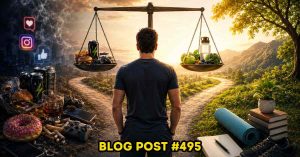
Here’s why: every right action you take compounds. The same is true for negative actions. Right actions create virtuous cycles, while bad actions create vicious ones. The more good things you do, the more good things you want to do. And the same goes for the bad.
And this is how you can measure your life. If you ever find yourself in a situation where everything seems to be going wrong or you are unhappy, break it down. Look at the specific elements of what you are actually doing, such as excessively drinking, spending unwisely, or neglecting your health. In the end, the best thing you can do is understand the different virtuous and vicious cycles in your life and address them individually, cultivate as many virtuous cycles as possible and remove the vicious ones.
This, in itself, is a formula for happiness. People often believe they’ll magically achieve happiness, but in reality, it’s something built over time through a commitment to the right actions and avoidance of the negative ones. As human beings, we’re psychological and biological creatures programmed to respond to certain stimuli with certain outcomes. So if you do right by your body and brain, they’ll be happy automatically. But if you’re consistently breaking all the rules—ignoring everything your body and mind ask you to do—then you’re surprised you’re unhappy? Well, that might just be the core reason.
At Optimal Happiness, this is exactly what we do in our training courses. We break down life into these so-called virtuous and vicious cycles. We identify where one can immediately start making improvements. By addressing these cycles, we become better, healthier, more productive, and happier human beings—and, as a result, we’ll have more money, more time, and more energy, partially because we won’t spend it on negative behaviors. And as a result, we will be happy.
To enquire more about this training, you can do so here.
So, what positive and negative behaviors do you already have? Let me know in the comments.
Stay happy.