
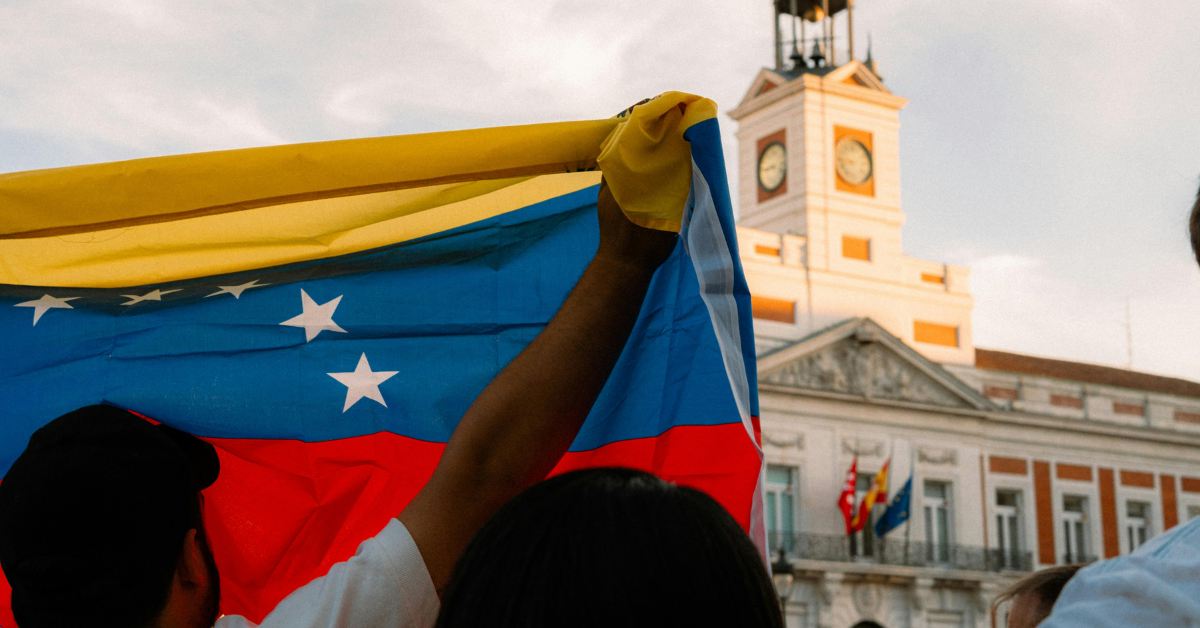
I don’t claim to have a comprehensive understanding of Venezuela’s situation—or any global issue, for that matter. Yet, as a happiness writer, I feel compelled to share my perspective on global happiness, as it profoundly affects people’s lives.
Yet, Venezuela is in the news again after the U.S. expressed political interest in the country, citing opposition to the human rights violations occurring there. Historically, however, U.S. interventions abroad have often been driven by political or economic interests rather than a genuine desire to help. This makes it difficult to trust their motives. Are they truly acting in the best interest of the Venezuelan people, or are they pursuing their own agenda?
Of course, I do not mean to absolve former Venezuelan president Hugo Chávez (1999–2013)—who pushed Venezuela into democratic decline—or his successor, Nicolás Maduro (2013–present), of responsibility for the country’s descent into outright authoritarianism. Chávez repressed press freedom, politicized the judiciary, and used state violence against opponents. Maduro, however, escalated these tactics, transforming Venezuela into a police state where dissent is met with torture, extrajudicial killings, and forced exile.
It is unforgivable that a few individuals suppress the many to cling to power, prioritizing their own happiness and greed above the well-being of everyone else. This comes at the cost of suffering, violence, and even death for countless innocent people. As a result, millions of Venezuelans have fled their country in search of safety and opportunity.
I also stand by what I wrote in my previous post, Happiness in Latin America, where I highlighted the major challenges facing the region: government corruption and violence perpetrated by organized crime. These issues create a cycle of suffering for ordinary people, trapping them between poverty and systemic injustice and making meaningful progress nearly impossible.
Despite this grim reality, I trust the perspective of my Venezuelan friend, who describes the country as beautiful and its people as kind and resilient. This much, at least, is undeniable.
While Venezuela’s political struggles are currently in the spotlight, let’s be honest: many countries in Latin America—and beyond—face similar challenges. After all, how is Venezuela’s situation fundamentally different from the ongoing conflicts in Palestine, Afghanistan, Ukraine, Myanmar, North Korea, Sudan, or the Democratic Republic of the Congo? Countless nations are grappling with serious political, economic, or social crises, all of which deserve our attention and empathy.
In this light, I’d love for U.S. foreign policy to be as idealistic as it portrays itself—genuinely working to protect people from leaders like Chávez and Maduro and promoting global well-being above all else, rather than masking self-interest under the guise of doing good.
I don’t mean to always criticize the U.S., and I would genuinely love to see U.S. President Donald Trump—or any leader—win a Nobel Peace Prize for making the world a better place. After all, it’s undeniable that the U.S. wields more power than any other country to make such change possible, as events in the U.S. tend to influence the world. Yet, I find this unlikely, as the U.S. often prioritizes its own interests first, and its actions are frequently less benevolent than we are led to believe.
The world is full of conflicts and injustices. My hope, as always, is for happiness and peace for everyone. I’ll continue writing about my vision for a utopian world, where everyone can thrive. For now, Venezuela serves as another tragic example of a political crisis that risks dragging innocent people into a conflict they never wanted. My heart goes out to all Venezuelans caught in the middle.












4 thoughts on “Venezuela: The Crisis of Power, Politics, and Accountability”
Thank you. I like to remember that “All Sunshine (happiness) Makes a Desert”, and then I think of what it would be like living without experiencing the desert. I appreciate your blog.
I Googled the phrase “All Sunshine (Happiness) Makes a Desert” and found that it is an Arabic proverb. It suggests that constant positivity and the absence of challenges lead to spiritual barrenness—just as endless sun without rain creates an arid desert. The proverb implies that life requires both joy (sunshine) and adversity (rain) for true growth, resilience, and appreciation, as challenges shape character and give meaning to the good times. While this saying carries logical weight, I question its applicability to Optimal Happiness, after all, we live in a world far from achieving the happiest life possible, where most people struggle with emotional well-being and a global mental health crisis persists. In this context, a bit more happiness would go a long way. As such, we shouldn’t proactively seek out unhappiness, as there is already more than enough of it in the world. Even if we take this idea to its logical extreme, I still believe a world filled with happiness is possible—and that it wouldn’t make us passive, weak, or devoid of meaning. I explore this further in the blog post below. Thank you for reading and liking my blog post!
https://optimalhappiness.com/happiness-unhappiness/
Insightful . The article thoughtfully describing Venezuela within a broader global pattern of political injustice, emphasizing empathy for ordinary people rather than geopolitical power plays. It is a human-centered perspective, reminding readers that behind ideological debates are real lives marked by suffering, resilience, and hope.🙏
Thank you, and I agree. My goal is to explore how to create a happier people and society. I look to examples like Venezuela for inspiration—both for what we should and shouldn’t do. This approach blends both local and global perspectives.